
Key takeaways
ADHD treatment in Lombard, IL — at a glance
- • ADHD Brain Mapping (qEEG) reveals the specific neural patterns behind attention, impulsivity, and executive-function challenges — so treatment is targeted, not guessed.
- • Personalized TMS is non-invasive, drug-free, and built from your brain map. (FDA-cleared for adult depression, anxious depression, and OCD; ADHD applications are off-label, physician-supervised.)
- • ADHD Treatment in Lombard at Reign-Bow serves children, teens, and adults across DuPage County and the western Chicago suburbs.
- • Serving Chicagoland families since 2022. Consultations by appointment only.
ADHD is not a focus problem — it is a regulation problem. At Reign-Bow Treatment Center in Lombard, IL, our team uses qEEG brain mapping to see exactly where attention and executive-function networks are dysregulated, then designs a personalized, drug-free TMS therapy plan to support the specific circuits involved. The result is care that targets the biology underneath distractibility, procrastination, impulsivity, working-memory failures, and emotional flooding — instead of just pushing harder against symptoms with stimulants and shame.
What ADHD actually is
ADHD — Attention-Deficit/Hyperactivity Disorder — is a neurodevelopmental condition that affects how the brain regulates attention, action, and emotion. It is not a failure of effort, intelligence, or character. It is a difference in how the prefrontal cortex coordinates with the rest of the brain to start tasks, stay on them, switch when needed, and stop the wrong impulse before it becomes an action.
ADHD shows up in three commonly described presentations: predominantly inattentive (the quiet "lost in space" pattern), predominantly hyperactive-impulsive (the restless, blurts-things-out pattern), and combined. Children frequently look hyperactive on the outside; adults often look fine on the outside while burning enormous energy to appear organized. Both are ADHD.
Common symptoms across the lifespan
- Difficulty sustaining attention on non-preferred tasks
- Strong attention on preferred tasks ("hyperfocus") that is hard to break
- Task initiation paralysis — knowing what to do but being unable to start
- Forgetfulness with appointments, items, and steps
- Impulsivity in speech, decisions, spending, or eating
- Restlessness, fidgeting, or an internal sense of being "wound up"
- Poor working memory — losing track of the second half of an instruction
- Difficulty with planning, sequencing, and time estimation
- Emotional reactivity, rejection sensitivity, and frustration intolerance
- Chronic lateness or arriving in a panicked rush
Daily challenges that don't show up on a checklist
The diagnostic checklist understates how exhausting ADHD is to live with. Adults describe years of working twice as hard to look half as organized, of being praised for potential while quietly drowning in unfinished projects, of forgetting why they walked into a room and quietly mourning the thing they meant to do. Parents describe homework battles that turn every weeknight into a power struggle, mornings where the simplest five-step routine collapses every time, and the heartbreak of watching a bright child be slowly convinced they are lazy.
Causes and contributors
ADHD is highly heritable — most families discover at least one parent recognizes themselves once a child is diagnosed. It is associated with differences in dopamine and norepinephrine signaling, with delayed maturation of prefrontal circuits, and with patterns of network connectivity that change how the brain coordinates attention. Sleep loss, chronic stress, trauma, and certain medical conditions can intensify ADHD-like presentations; treatment plans need to account for that.
Functional impact
Untreated or poorly treated ADHD doubles the risk of academic struggles, raises the risk of mood and anxiety disorders, increases accidental injury rates, and contributes to relationship and employment instability. Treated ADHD looks different — kids who can show what they know on a test, adults who can finish what they start, families that don't have to argue about every transition.
What is happening in the ADHD brain
To understand ADHD treatment, it helps to understand what the brain is actually doing. Three systems matter most: executive function, attention networks, and frontal-lobe regulation.
Brain Networks Commonly Evaluated During qEEG Brain Mapping
qEEG helps identify patterns of brain activity that may contribute to communication, focus, emotional regulation, sensory processing, and behavior.
Sensory Cortex
Sensory integration, auditory processing, visual processing, and sensory modulation.
Prefrontal Cortex
Executive function, focus, attention, impulse control, planning, and emotional regulation.
Limbic System
Emotion regulation, anxiety response, motivation, mood stability, and stress processing.
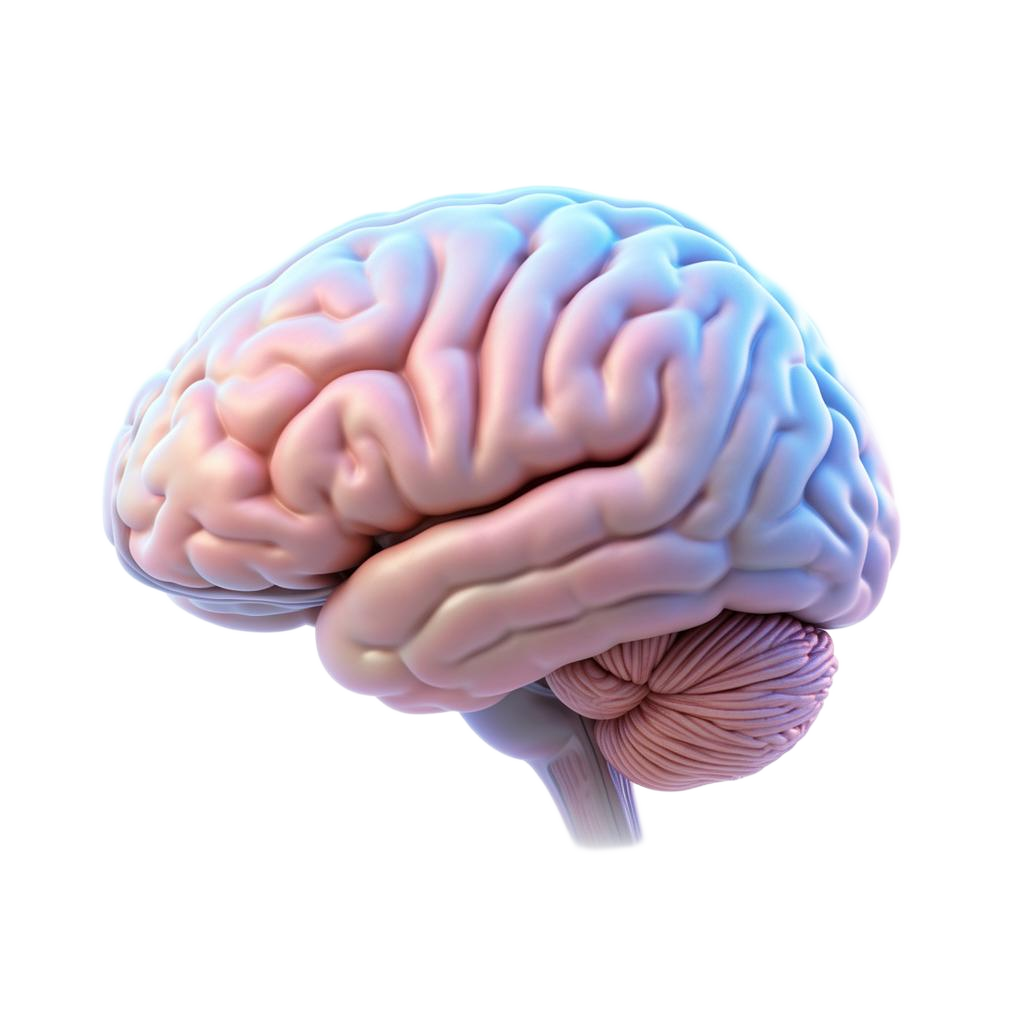
Temporoparietal Junction
Social awareness, communication, perspective taking, and social cognition.
Cerebellum
Motor coordination, timing, procedural learning, and supporting connectivity.
Executive function and the prefrontal cortex
The prefrontal cortex is the brain's project manager. It handles working memory, planning, impulse control, sequencing, and the inner voice that says "wait." In ADHD, prefrontal regions tend to be underactive or under-coordinated with downstream regions. Tasks that should be automatic — start the homework, put the phone away, finish the email — require enormous effort because the manager is offline. This is why people with ADHD can be brilliant and stuck at the same time.
Attention networks: alerting, orienting, and executive
Neuroscience distinguishes three attention networks. The alerting network sets baseline vigilance. The orienting network shifts focus to relevant stimuli. The executive network resolves conflict between competing demands. In ADHD, all three can be dysregulated, but the executive network — anchored in the anterior cingulate and dorsolateral prefrontal cortex — is most often implicated in the experience of "I know what I should pay attention to, and I just can't."
Frontal-lobe regulation and the theta/beta signature
On qEEG, one of the most replicated findings in ADHD is an elevated theta/beta ratio in frontal regions — too much slow drifting activity, not enough fast organized activity in the very areas that should be quietly running the show. This is the neural equivalent of trying to drive a car with a foot half on the brake. Other common findings include frontal alpha asymmetry, reduced beta coherence, and under-activation in the default mode network when attention is required.
Why dopamine matters but is not the whole story
Stimulant medication works by increasing available dopamine and norepinephrine in the prefrontal cortex. For many people it helps. For others — perhaps 30–40% — stimulants do not produce reliable benefit, or produce benefit at the cost of intolerable side effects. That does not mean those brains are untreatable. It usually means the dysregulation is structural to the network — connectivity, coherence, frequency balance — and a network-level treatment like qEEG-guided TMS is a better fit than a neurotransmitter-level one.
Talk with our team about ADHD treatment in Lombard
Verify your insurance benefits or request a consultation — most families hear back within one business day.
What qEEG Brain Mapping shows in ADHD
A qEEG records 19+ channels of brain electrical activity for about 20 minutes — eyes open, eyes closed, and sometimes during a brief cognitive task. Software compares the recording to a normative database matched to your age and sex, producing color-coded maps that show which regions and frequencies are over- or under-active. This is the foundation of ADHD brain mapping at Reign-Bow.
Brainwave activity: what the bands mean for attention
Brain electrical activity organizes into frequency bands — delta, theta, alpha, beta, and gamma. Each band reflects a different mode of processing. For ADHD specifically, three patterns matter most: theta (slow, drifting, daydream-like) tends to be elevated in frontal regions when it should be subdued; beta (fast, focused, organized) tends to be reduced where it should be active; and the ratio between them is one of the most studied biomarkers in attention research.
Network function and connectivity
Modern qEEG analyses go beyond simple power and look at how regions communicate. We look at coherence and phase synchrony between prefrontal, parietal, and cingulate regions — the circuits responsible for sustained attention and task switching. Under-connectivity between these areas often correlates with the felt experience of "my brain isn't talking to itself today."
Pattern identification and subtype mapping
Two children can both meet criteria for ADHD and have completely different brain maps. One may show classic frontal slowing; another may show elevated high-beta consistent with a stressed, hypervigilant pattern that mimics ADHD but actually responds to a calming protocol. qEEG lets us see that difference rather than guess at it — which is why patients who have failed multiple stimulants often do well with a qEEG-guided plan.
Personalized treatment planning from real data
Once the map is interpreted, your physician selects TMS targets, frequency, and dosing based on your specific findings. There is no universal "ADHD protocol" at Reign-Bow — there is your plan, built from your data, with measurable targets we can revisit on a follow-up qEEG. Read more about what brain mapping is and how it is used in our qEEG program.
How TMS Therapy works for ADHD
The treatment process
Transcranial Magnetic Stimulation uses focused magnetic pulses, similar in strength to an MRI, to modulate activity in specific cortical regions. For ADHD, common targets include the dorsolateral prefrontal cortex (where executive control lives), the supplementary motor area (involved in impulse inhibition), and regions of the cingulate cortex that handle conflict monitoring. Targets and frequencies are selected from your qEEG — there is no off-the-shelf "ADHD protocol."
What sessions are like
You sit in a comfortable chair, fully awake. A small coil is positioned over the treatment area on your scalp. You will feel and hear a tapping sensation as the magnetic pulses are delivered. Sessions typically last 20–40 minutes. There is no anesthesia, no recovery time, and no cognitive fog afterward — most patients return directly to school, work, or driving.
Safety
TMS has been used clinically for more than two decades and has a strong safety record. The most common side effect is mild scalp sensation that fades within minutes. Less common is a transient headache during the first week. Serious adverse events are rare. TMS is FDA-cleared for adult depression, anxious depression, and OCD; pediatric and ADHD applications are considered off-label and are delivered under physician oversight with personalized, qEEG-guided protocols.
Treatment timeline and what to expect
Most patients complete an initial course in 6–12 weeks of brief weekday sessions. Many notice early changes — fewer distractions, smoother task initiation, less emotional flooding — within the first 2–4 weeks. More structural gains in sustained attention, working memory, and school or work performance typically build over weeks 6–12. We use validated rating scales weekly so you can see the trajectory in numbers, not just in your impressions.
Treatment journey
From first call to follow-up qEEG
A typical brain-based care course at Reign-Bow. Exact timing varies with severity, age, and co-occurring conditions.
- Step 1
Consultation
Week 0
Talk through goals, history, and what you've already tried.
- Step 2
Insurance Verification
Week 0–1
Benefits checked; written estimate within one business day.
- Step 3
qEEG Brain Map
Week 1
20-minute, non-invasive recording compared to age-matched norms.
- Step 4
Physician Review
Week 1–2
Findings reviewed in plain language; protocol designed.
- Step 5
Personalized TMS
Weeks 2–10
Brief weekday sessions tailored to your brain map.
- Step 6
Follow-up qEEG
Week 12
Re-mapping confirms neurological change and next phase.
Follow-up qEEGs
At the end of the initial course, we repeat the qEEG. This is one of the most important parts of the program — it tells us whether the underlying pattern has actually shifted, not just whether the symptom rating moved. From that data we decide whether to taper, maintain, or extend treatment. Some patients return for a brief booster course six to twelve months later; many do not. See our full 8-step treatment process and our personalized brain stimulation programs.
ADHD symptoms we treat — scannable view
Attention and focus
- Inability to sustain attention on long or non-preferred tasks
- Mental drift, daydreaming, or "going blank" mid-conversation
- Hyperfocus on preferred tasks at the cost of everything else
Executive function
- Task initiation paralysis
- Difficulty sequencing multi-step projects
- Poor working memory and frequent forgetting
- Time blindness and chronic lateness
Impulsivity and self-regulation
- Blurting, interrupting, acting before thinking
- Impulsive spending, eating, or scrolling
- Restlessness or an internal sense of being wound up
Emotional regulation
- Frustration intolerance and short fuse
- Rejection sensitivity and rumination
- Emotional flooding that feels disproportionate to the trigger
ADHD across the lifespan
Children and elementary years
School-age children with ADHD often hit a wall around third or fourth grade, when academic demands outgrow working memory and homework becomes a marathon. Brain-based care can change the trajectory by addressing the underlying regulation, not just adding accommodations on top of an overwhelmed system.
Teens
Adolescence amplifies ADHD. Executive demands explode, sleep collapses, social stakes rise, and a teen who used to muddle through can spiral. Many teens also carry co-occurring anxiety or low mood by this point. A qEEG can help separate which pattern is leading and inform a plan that doesn't medicate one thing while ignoring another.
College students and young adults
The transition out of structured school environments is where many people with ADHD first realize they were leaning on external scaffolding their whole life. Brain-based care can rebuild internal scaffolding rather than rely on increasing stimulant doses.
Adults
Adults often arrive after a child's diagnosis or after a job change or family expansion exposes the limits of their coping. They tell us they have always been "the smart one who can't follow through." qEEG-guided treatment frequently produces gains in initiation, follow-through, and emotional steadiness that medication alone never delivered.
What patients tend to notice over a treatment course
- Less reliance on stimulant medication, often at lower doses
- Smoother task initiation — fewer hours lost to "not starting"
- Better sustained attention on long or non-preferred tasks
- Stronger working memory and fewer dropped instructions
- Less impulsivity in speech, decisions, and reactions
- Calmer emotional baseline and less rejection sensitivity
- Improved school or work performance with less effort
- Better sleep onset and morning function
- More flexibility around transitions
- A felt sense of agency — "I can run my day"
Read real stories from local families on our patient testimonials page.
Co-occurring conditions we plan for
Pure ADHD is rare. Most patients arrive with at least one of the following: anxiety, depression, sleep problems, autism, or trauma history. We map for all of them at once and build a plan that respects how they interact.
- Anxiety — common in adults with lifelong ADHD; often masks as "Type-A overcompensation."
- Depression — frequently develops after years of feeling like you are failing at things you should be able to do.
- Autism — about half of autistic individuals also meet ADHD criteria; the qEEG helps separate the two patterns.
- Sleep disorders — ADHD brains are notoriously slow to power down at night.
- Emotional regulation — the under-recognized core of ADHD.
Serving Lombard and nearby communities
Reign-Bow Treatment Center is based in Lombard, IL and provides ADHD help in Lombard for families and adults across the western Chicago suburbs. If you are searching for "ADHD treatment Lombard IL" or "qEEG ADHD near me," we welcome patients from each of the communities below. Consultations are by appointment only. Call 630-448-2721 or email info@reignbowtreatmentcenter.com to schedule.
Why Reign-Bow
Insurance, verified before you start
Many BCBS, Aetna, Cigna, and United Healthcare plans cover some or all of qEEG and TMS components. We verify benefits before treatment and send a written estimate within one business day. Submit our insurance verification form to begin.
Serving Chicagoland families since 2022
We opened our doors to bring qEEG-guided, drug-free care to families in the western suburbs who were tired of stimulant trial-and-error. Every plan is built around objective brain data and a real person — not a template.
Family-centered care
ADHD does not happen in isolation. We include parents in plan design, give you the language to support regulation at home, and coordinate with schools and prescribers when invited. Adults get the same partnered approach with spouses and work demands in view.
A team that explains the brain in plain language
You will never leave a Reign-Bow appointment confused about what the map showed or why a target was chosen. The science is the point — and so is your understanding of it.
Talk with our team about ADHD treatment
Verify your insurance benefits or request a consultation — most families hear back within one business day.
Frequently asked questions
›What is qEEG-guided ADHD treatment?
qEEG-guided ADHD treatment uses a quantitative EEG brain map to identify which attention and executive-function networks are dysregulated, then designs a personalized, drug-free plan — typically Transcranial Magnetic Stimulation (TMS) — to address those specific regions. Instead of trying medications until something sticks, every plan at Reign-Bow starts with objective data about your brain.
›Is TMS therapy safe for children and teens with ADHD?
TMS is non-invasive, drug-free, and well-tolerated. There are no needles, no sedation, and no recovery time. TMS is FDA-cleared for adult depression, anxious depression, and OCD; pediatric and ADHD applications are considered off-label and are delivered under physician oversight with personalized, qEEG-guided protocols. The most common side effect is mild scalp sensation that fades within minutes.
›Does qEEG ADHD treatment replace stimulant medication?
Not necessarily. Many patients are able to reduce their reliance on stimulants over time, and some discontinue them under physician supervision. Others choose to stay on a lower dose. We work with your prescriber — we do not pressure anyone to stop medication.
›How quickly will I or my child see results?
Many patients notice subtle changes — fewer distractions, smoother task initiation, less emotional flooding — within the first 2–4 weeks. More structural gains in sustained attention, working memory, and school or work performance typically build over 6–12 weeks.
›Can adults get ADHD treatment at Reign-Bow?
Yes. Adult ADHD is one of our most common presentations. The qEEG often reveals patterns that explain why traditional medication, productivity systems, or willpower have all fallen short. We build adult plans around real-life demands — work, family, and executive load.
›What is the difference between ADHD and just being distracted?
Everyone gets distracted. ADHD is a persistent, neurologically driven pattern of attention dysregulation, impulse control difficulty, and executive-function challenges that show up across multiple settings and meaningfully impair daily life. qEEG can show the underlying neural signature behind that experience.
›Does insurance cover ADHD brain mapping and TMS?
Many BCBS, Aetna, Cigna, and United Healthcare plans cover some or all of qEEG and TMS components. We verify benefits before treatment — submit our insurance form and we will send a written estimate within one business day.
›How is ADHD different in the qEEG from anxiety or autism?
ADHD often shows elevated theta/beta ratios in frontal regions, while anxiety more often appears as elevated high-beta and frontal alpha asymmetry, and autism shows distinctive connectivity differences across the default mode network. Many patients have overlapping patterns; the brain map helps separate them.
›Do you serve adults and families outside of Lombard?
Yes. We serve Lombard, Naperville, Oak Brook, Elmhurst, Wheaton, Downers Grove, Glen Ellyn, Hinsdale, and surrounding Chicagoland communities. Consultations are by appointment only — call 630-448-2721 or email info@reignbowtreatmentcenter.com.
›What does a typical first visit look like?
The first visit is a clinical consultation and qEEG brain map. The cap is painless, the recording takes about 20 minutes, and you can sit comfortably the entire time. Within a week, our physicians review the map with you and propose a personalized treatment plan.
›Will this help with the emotional side of ADHD?
Yes — and we consider it essential. Rejection sensitivity, frustration tolerance, and emotional flooding are core to ADHD even though they are not in the diagnostic checklist. qEEG-guided protocols often target the prefrontal–limbic regulation circuits that drive emotional reactivity, not just attention.
›Is this a replacement for therapy or coaching?
No — it is a complement. Many of our patients continue with therapy, ADHD coaching, or school services while in treatment. Because we address underlying brain regulation, families often report those supports become more effective.