Key takeaways
TBI treatment in Lombard, IL — at a glance
- • TBI Brain Mapping (qEEG) reveals post-injury network disruption — slowing, connectivity changes, dysregulation — that structural scans miss.
- • Personalized TMS is non-invasive, drug-free, and built from your brain map. (FDA-cleared for adult depression, anxious depression, and OCD; TBI applications are off-label, physician-supervised.)
- • Brain Injury Treatment in Lombard at Reign-Bow serves concussion patients, post-concussion syndrome, and post-TBI recovery across DuPage County and the western Chicago suburbs.
- • Serving Chicagoland families since 2022. Consultations by appointment only.
Traumatic brain injury is a network problem, not just a structural one. At Reign-Bow Treatment Center in Lombard, IL, our team uses qEEG brain mapping to see exactly how your networks were disrupted by the injury, then designs a personalized, drug-free TMS therapy plan to support recovery. The result is care that targets the biology underneath persistent brain fog, headaches, mood changes, sleep disruption, and fatigue — instead of asking you to "give it more time" while the dysregulation entrenches.
What TBI actually is
Traumatic brain injury is an injury to the brain caused by external force — a blow, a jolt, a fall, a blast, a sudden deceleration. TBI exists on a spectrum from mild (concussion) to severe. The vast majority of TBIs are mild, which can be a misleading label: "mild" describes the initial mechanism, not the lived experience that follows.
Most concussions resolve within days to weeks. A meaningful subset — estimates range from 10–30% — do not. When symptoms persist beyond the expected recovery window, the diagnosis becomes post-concussion syndrome. The defining feature is that subjective symptoms (cognitive, mood, sleep, sensory) outlast what acute imaging or examination can explain. People are told their scans look fine. Their lives do not feel fine.
Common symptoms
- Persistent headache
- Brain fog and slowed thinking
- Concentration and attention difficulties
- Short-term memory complaints
- Fatigue out of proportion to activity
- Sleep disturbance — onset, depth, and quality
- Irritability and emotional dysregulation
- Anxiety, low mood, or post-injury depression
- Light and noise sensitivity
- Dizziness, balance changes, or vestibular symptoms
- Reduced tolerance for screens, crowds, or cognitive load
Daily challenges that don't show up on a checklist
A post-TBI life is the life you used to live, minus your bandwidth. Meetings you used to lead now drain you by lunch. The grocery store overwhelms you. You read the same paragraph three times. Conversations require effort you didn't used to need. You snap at people you love and don't recognize yourself. You hide it at work as long as you can. You start canceling plans. You wonder if you are the problem now.
Causes and contributors
TBI causes include sports collisions, motor vehicle accidents, falls (the leading cause across the lifespan), assault, blast exposure in military service, and repetitive sub-concussive impacts. Recovery is influenced by initial severity, mechanism, age, prior brain injury history, sleep, mood, vascular health, and how much load the brain is being asked to carry during the recovery window. People who try to push through too soon often pay for it later.
Functional impact
Untreated persistent post-TBI symptoms drive job loss, academic underperformance, relationship strain, and secondary depression. Treated patients often regain stamina, sharpen cognition, sleep through the night, and stop bracing for the next sensory overload. The point of care is restoration of function — the day you can finish, the conversation you can hold, the version of you you remember.
What is happening in the injured brain
Three brain-level concepts matter most for understanding TBI symptoms: network disruption, connectivity changes, and the recovery mechanisms the brain uses to reorganize.
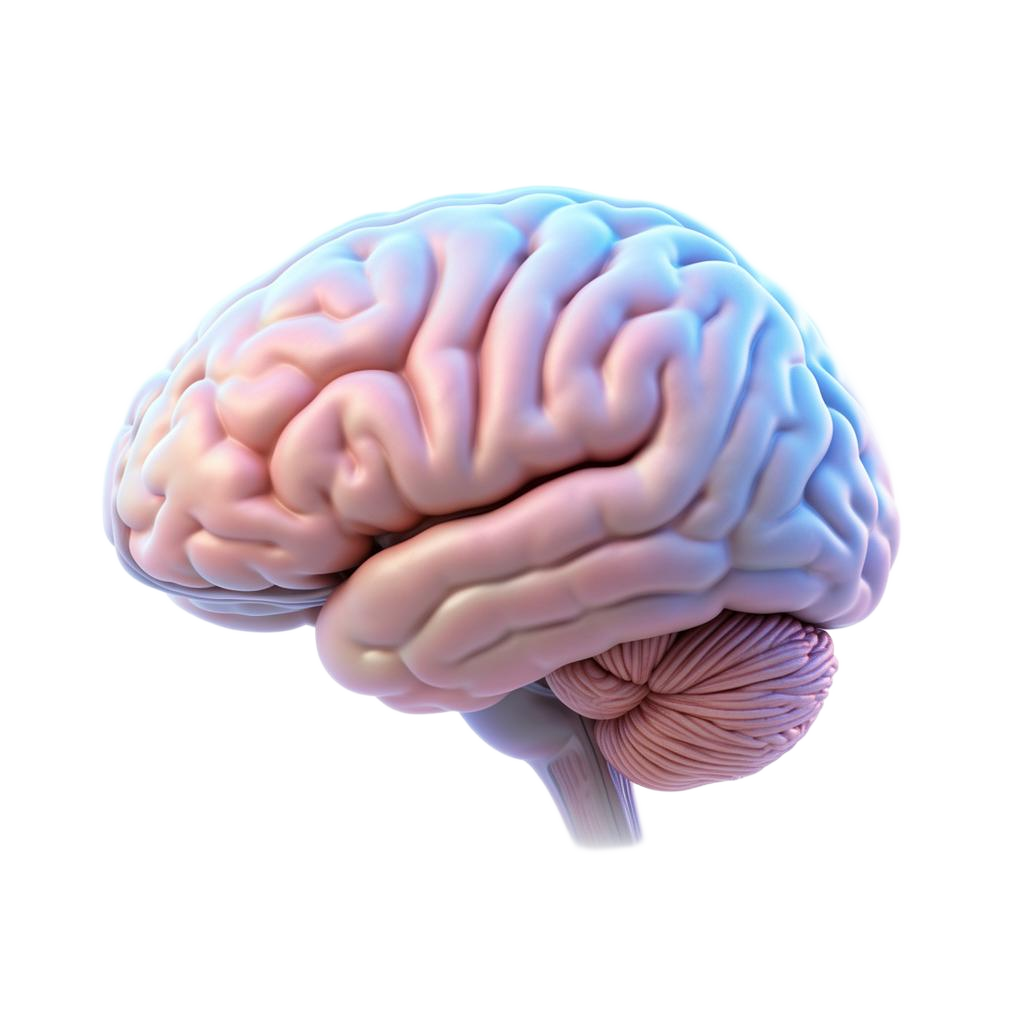
Brain Networks Commonly Evaluated During qEEG Brain Mapping
qEEG helps identify patterns of brain activity that may contribute to communication, focus, emotional regulation, sensory processing, and behavior.
Sensory Cortex
Sensory integration, auditory processing, visual processing, and sensory modulation.
Prefrontal Cortex
Executive function, focus, attention, impulse control, planning, and emotional regulation.
Limbic System
Emotion regulation, anxiety response, motivation, mood stability, and stress processing.
Temporoparietal Junction
Social awareness, communication, perspective taking, and social cognition.
Cerebellum
Motor coordination, timing, procedural learning, and supporting connectivity.
Network disruption: why symptoms outlast structure
TBI rarely destroys a single brain region. What it typically disrupts is the communication between regions — the long white-matter tracts that carry signal across the brain, and the timing that lets distant areas work as a unit. A concussion can shear these connections at a microscopic level and leave the gross structure intact. That is why MRI and CT can be normal while function is not. qEEG measures function — the electrical conversation between regions — and reveals what structural imaging cannot.
Connectivity changes and the slowing signature
One of the most replicated post-TBI findings on qEEG is increased slow-wave activity — excess theta or delta — in frontal regions where it should not predominate. This pattern correlates with the felt experience of brain fog, slowed processing, and effortful thinking. Other common findings include altered coherence between regions, reduced peak alpha frequency, and dysregulated patterns at the borders of the injury.
The default mode network and post-injury cognition
The default mode network is one of the systems most often disrupted after TBI. It supports memory consolidation, self-referential thought, and the ability to maintain a coherent sense of self across time. Disruption here contributes to the post-injury experience of feeling like a stranger in your own life.
Recovery mechanisms: neuroplasticity
The brain is plastic — it can reorganize and form new connections to support function. Recovery is not just passive healing; it is active learning. Brain regions adjacent to disrupted areas can take over function, networks can rewire, and dysregulated rhythms can normalize. The brain does this best when it is supported — when it gets sleep, manageable cognitive load, vascular fitness, mood stability, and (where indicated) targeted neuromodulation that nudges the right circuits in the right direction. qEEG-guided TMS is one of the most precise tools available for that nudge.
Why time alone often isn't enough
"Give it time" works for a lot of concussions — but not all. When symptoms persist past the natural recovery window, the dysregulated pattern is no longer a transient disruption; it has become the brain's new baseline. Continuing to wait will not change it. Targeted, network-level intervention will.
Talk with our team about TBI treatment in Lombard
Verify your insurance benefits or request a consultation — most families hear back within one business day.
What qEEG Brain Mapping shows after TBI
A qEEG records 19+ channels of brain electrical activity for about 20 minutes — eyes open, eyes closed, and sometimes during a brief task. Software compares the recording to a normative database matched to your age and sex, producing color-coded maps that show which regions and frequencies are over- or under-active. This is the foundation of TBI brain mapping at Reign-Bow.
Brainwave activity: what the bands mean after injury
For TBI specifically, the most common findings are excess slow activity (theta or delta) in frontal regions, reduced peak alpha frequency, and dysregulated patterns at the site or boundary of the impact. Some patients show coherence abnormalities — regions that should be communicating tightly that have lost timing. Each pattern corresponds to part of the post-injury experience and gives us a target.
Network function and connectivity
Beyond simple power, we look at how regions communicate. We examine coherence between prefrontal and posterior regions for the slowing-signature pattern. We look at the default mode network for post-injury cognitive disruption. We compare the injured hemisphere or region to its counterpart for the asymmetry patterns commonly seen after impact.
Pattern identification — separating TBI from look-alikes
Post-TBI symptoms overlap with depression, anxiety, ADHD, and PTSD. Many patients have all of the above by the time they reach our door. The qEEG helps separate the injury pattern from the secondary patterns it created, so the plan addresses both layers. Where TBI and PTSD coexist — common in veterans and assault survivors — the map makes the contributions visible.
Personalized treatment planning from real data
Once the map is interpreted, your physician selects TMS targets, frequency, and dosing based on your specific findings. There is no single "TBI protocol" at Reign-Bow — there is your plan, built from your data, with measurable targets we can revisit on a follow-up qEEG. Read more about what brain mapping is and our qEEG program.
How TMS Therapy works for TBI
The treatment process
Transcranial Magnetic Stimulation uses focused magnetic pulses to modulate activity in specific cortical regions. For TBI, common targets are selected from the qEEG — often the dorsolateral prefrontal cortex (for executive and mood symptoms), regions of the cingulate cortex (for attention and emotional regulation), and areas adjacent to the disruption site to support neuroplastic reorganization. Parameters are adjusted to the patient and the pattern.
What sessions are like
You sit in a comfortable chair, fully awake. A small coil is positioned over the treatment area on your scalp. You will feel and hear a tapping sensation as the magnetic pulses are delivered. Sessions typically last 20–40 minutes. There is no anesthesia, no recovery time, and no cognitive fog afterward — most patients return directly to work, school, or driving. Sensory-sensitive patients can request a low-stimulation environment.
Safety
TMS has been used clinically for more than two decades and has a strong safety record. In TBI populations specifically, careful screening for seizure history is essential, and we adjust parameters accordingly. The most common side effect is mild scalp sensation that fades within minutes. Less common is a transient headache during the first week. Serious adverse events are rare. TMS is FDA-cleared for adult depression, anxious depression, and OCD; TBI applications are considered off-label and are delivered under physician oversight with personalized, qEEG-guided protocols.
Treatment timeline and what to expect
Most patients complete an initial course in 6–12 weeks of brief weekday sessions. Many notice early gains — clearer thinking, better sleep, more even mood — within the first 2–4 weeks. More structural gains in stamina, executive function, headache reduction, and resilience to overstimulation typically build over weeks 6–12. We use validated cognitive and mood rating scales weekly so you can see the trajectory in numbers, not just impressions.
Treatment journey
From first call to follow-up qEEG
A typical brain-based care course at Reign-Bow. Exact timing varies with severity, age, and co-occurring conditions.
- Step 1
Consultation
Week 0
Talk through goals, history, and what you've already tried.
- Step 2
Insurance Verification
Week 0–1
Benefits checked; written estimate within one business day.
- Step 3
qEEG Brain Map
Week 1
20-minute, non-invasive recording compared to age-matched norms.
- Step 4
Physician Review
Week 1–2
Findings reviewed in plain language; protocol designed.
- Step 5
Personalized TMS
Weeks 2–10
Brief weekday sessions tailored to your brain map.
- Step 6
Follow-up qEEG
Week 12
Re-mapping confirms neurological change and next phase.
Follow-up qEEGs
At the end of the initial course, we repeat the qEEG. This is one of the most important parts of the program — it tells us whether the underlying pattern has actually shifted, not just whether the symptom rating moved. From that data we decide whether to taper, maintain, or extend treatment. Some patients return for a brief booster course six to twelve months later. See our full 8-step treatment process and our personalized brain stimulation programs.
TBI symptoms we treat — scannable view
Cognitive
- Brain fog and slowed processing
- Concentration and attention difficulties
- Short-term memory complaints
- Word-finding problems
- Executive function loss — planning, sequencing, follow-through
Mood and emotional
- Irritability and short fuse
- Anxiety and post-injury depression
- Emotional flooding
- Feeling unlike yourself
Physical and sensory
- Persistent headache
- Light and noise sensitivity
- Dizziness and balance changes
- Visual disturbance with screens or motion
- Fatigue out of proportion to activity
Sleep and energy
- Difficulty falling or staying asleep
- Non-restorative sleep
- Crashes after cognitive or physical load
When TBI travels with other conditions
Most patients with persistent post-TBI symptoms also carry one or more of the following — and the qEEG helps us see and treat all of them:
- Depression — post-injury depression is common and has its own FDA-cleared TMS protocols.
- Anxiety — post-concussion anxiety often shows distinct hyperarousal patterns.
- PTSD — co-occurring TBI and PTSD are common after assault and combat; the map separates the contributions.
- Sleep disorders — post-TBI sleep disruption can feed every other symptom.
- Attention difficulties — post-injury attention loss is often confused with ADHD and benefits from a different protocol.
- Autism Brain Mapping — for our autistic patients who sustain a concussion, sensory load can intensify the post-injury picture and warrants a careful, paced plan.
What patients tend to notice over a treatment course
- Clearer thinking and faster processing
- Better stamina across a full work or school day
- Reduced headache frequency and intensity
- Improved sleep onset and depth
- Less light and noise sensitivity
- More patience and less irritability
- The return of executive function — planning, follow-through, follow-up
- Quicker emotional recovery from setbacks
- Restored confidence with screens, meetings, and crowds
- A felt sense of "I have my brain back"
Read real stories from local patients on our patient testimonials page.
Serving Lombard and nearby communities
Reign-Bow Treatment Center is based in Lombard, IL and provides brain injury treatment in Lombard for concussion and post-TBI patients across the western Chicago suburbs. If you are searching for "TBI treatment Lombard IL" or "concussion recovery near me," we welcome patients from each of the communities below. Consultations are by appointment only. Call 630-448-2721 or email info@reignbowtreatmentcenter.com.
Why Reign-Bow
Insurance, verified before you start
Many BCBS, Aetna, Cigna, and United Healthcare plans cover some or all of qEEG and TMS components — often under co-occurring depression diagnoses where TMS is FDA-cleared. We verify benefits before treatment and send a written estimate within one business day. Submit our insurance verification form to begin.
Serving Chicagoland families since 2022
We opened our doors to bring qEEG-guided, drug-free care to people in the western suburbs whose post-injury symptoms had outlasted their MRI. Every plan is built around objective brain data and a real person — not a template.
Family-centered care
TBI reshapes households. We include spouses, parents, and adult family members when invited, give you language for what is happening, and coordinate with neurology, primary care, vestibular therapy, and athletic training so the whole plan moves in the same direction.
A team that explains the brain in plain language
You will never leave a Reign-Bow appointment confused about what the map showed or why a target was chosen. The science is the point — and so is your understanding of it.
Talk with our team about TBI treatment
Verify your insurance benefits or request a consultation — most families hear back within one business day.
Frequently asked questions
›What is qEEG-guided TBI treatment?
qEEG-guided TBI treatment uses a quantitative EEG brain map to identify how networks are disrupted after a brain injury — slowing, connectivity changes, dysregulation — then designs a personalized, drug-free plan (typically TMS) to support recovery. Instead of waiting and hoping, every plan at Reign-Bow is built from objective data about your brain.
›Is TMS therapy safe after a brain injury?
TMS is non-invasive, drug-free, and well-tolerated, and has been studied in post-concussion and TBI populations with encouraging results. There are no needles, no sedation, and no recovery time. TMS is FDA-cleared for adult depression, anxious depression, and OCD; TBI applications are considered off-label and are delivered under physician oversight with personalized, qEEG-guided protocols.
›What kinds of brain injury do you treat?
We treat patients with mild traumatic brain injury (concussion), post-concussion syndrome, and the cognitive and mood symptoms that persist after moderate TBI once acute medical care is complete. We treat sports-related injuries, motor vehicle accidents, falls, blast exposure, and assault-related injury. We are not an acute or emergency facility — patients should be medically stable before beginning our program.
›How is qEEG different from an MRI or CT scan?
MRI and CT scans show structure — what the brain looks like. qEEG shows function — how the brain is working. Many people with persistent post-TBI symptoms have normal scans because the injury is to the networks, not the tissue visible on imaging. qEEG can reveal the functional disruption a structural scan misses.
›How long after my injury can I be treated?
We see patients across the recovery timeline. Some come weeks after a concussion when initial symptoms have not resolved. Others come months or years later carrying persistent symptoms. There is no clean cutoff — what matters is whether the qEEG shows treatable patterns, which it often does even years out.
›Will treatment help with post-concussion mood and irritability?
Yes. Mood, irritability, anxiety, and emotional dysregulation after TBI are network-level problems and are among the symptoms qEEG-guided TMS is best suited to address. Many patients report restored emotional steadiness during the same course that improves cognitive symptoms.
›Can TMS help with post-concussion headaches?
Some patients report meaningful reduction in headache frequency and intensity, particularly when headaches are tied to the underlying neural dysregulation. Headache is multi-factorial and we coordinate with your neurologist or primary care provider.
›Does insurance cover TBI brain mapping and TMS?
Many BCBS, Aetna, Cigna, and United Healthcare plans cover some or all of qEEG and TMS components — often under co-occurring depression diagnoses where TMS is FDA-cleared. We verify benefits before treatment and send a written estimate within one business day.
›How long does TBI treatment take?
Most patients complete an initial course in 6–12 weeks of brief weekday sessions. Many notice early gains — clearer thinking, better sleep, more even mood — within the first 2–4 weeks. More structural gains in stamina, executive function, and resilience to overstimulation typically build over weeks 6–12.
›Will I need a follow-up qEEG?
Yes. We repeat the qEEG at the end of the initial course to measure whether the underlying network pattern has actually shifted. This is one of the most important parts of the program — it tells us whether to taper, maintain, or extend treatment.
›Do you serve patients outside of Lombard?
Yes. We serve Lombard, Naperville, Oak Brook, Elmhurst, Wheaton, Downers Grove, Glen Ellyn, Hinsdale, and surrounding Chicagoland communities. Consultations are by appointment only — call 630-448-2721 or email info@reignbowtreatmentcenter.com.
›What does a typical first visit look like?
The first visit is a clinical consultation and qEEG brain map. The cap is painless, the recording takes about 20 minutes, and you can sit comfortably the entire time. Within a week, our physicians review the map with you and propose a personalized treatment plan.