
Key takeaways
PTSD treatment in Lombard, IL — at a glance
- • Trauma Brain Mapping (qEEG) reveals the specific neural patterns behind hypervigilance, flashbacks, and emotional dysregulation — so treatment is targeted, not guessed.
- • Personalized TMS is non-invasive, drug-free, and built from your brain map. (FDA-cleared for adult depression, anxious depression, and OCD; PTSD applications are off-label, physician-supervised.)
- • PTSD Therapy in Lombard at Reign-Bow serves veterans, first responders, and survivors across DuPage County and the western Chicago suburbs.
- • Serving Chicagoland families since 2022. Consultations by appointment only.
PTSD is a neurological condition, not a character flaw. At Reign-Bow Treatment Center in Lombard, IL, our team uses qEEG brain mapping to see exactly where trauma circuitry is keeping the threat system activated, then designs a personalized, drug-free TMS therapy plan to bring those circuits back into balance. The result is care that targets the biology underneath flashbacks, nightmares, hypervigilance, and emotional dysregulation — without requiring you to retell your trauma to be treated.
What PTSD actually is
Post-traumatic stress disorder develops after exposure to one or more traumatic events — combat, assault, accidents, medical events, childhood abuse, witnessing harm to others, or sustained relational trauma. It is the brain and nervous system's adaptation to overwhelming threat: a survival response that became stuck on. Living with PTSD is not a sign of weakness or insufficient processing. It is a sign that a normal protective system encoded the threat too deeply for the rest of life to override.
The DSM-5 organizes PTSD symptoms into four clusters: intrusion (flashbacks, nightmares, intrusive memories), avoidance (of reminders, places, or topics), negative changes in cognition and mood (numbness, distorted self-blame, loss of interest), and arousal and reactivity (hypervigilance, exaggerated startle, sleep disturbance, irritability). Most people who carry the diagnosis carry symptoms in all four clusters at once.
Common symptoms
- Intrusive memories, flashbacks, or replay loops
- Nightmares and disrupted sleep
- Hypervigilance — constant background scanning for threat
- Exaggerated startle response
- Emotional numbness or flatness
- Avoidance of reminders, places, or conversations
- Irritability, short fuse, or anger outbursts
- Difficulty concentrating
- Distorted self-blame, shame, or guilt
- Loss of interest in activities and relationships
- Dissociation — feeling unreal or detached from the body
Complex PTSD
Complex PTSD develops after prolonged or repeated trauma — childhood abuse, captivity-like relationships, ongoing combat exposure, sustained operational stress. It includes the four DSM clusters plus persistent difficulties with emotion regulation, self-perception, and relationships. Brain maps in complex PTSD often show broader, more global dysregulation than single-incident PTSD, and treatment plans are paced more gradually.
Daily challenges that don't show up on a checklist
PTSD shapes the small geography of a day. The choice of where to sit in a restaurant. The route home that avoids a particular intersection. The phone call you cannot make. The smell, the song, the weather that drops you back into a moment you have not actually escaped. The exhaustion of looking calm while the body is running a constant background alarm. The strain on partners and children who cannot follow you into the parts of yourself you cannot revisit.
Causes and contributors
PTSD is the result of exposure plus vulnerability. Vulnerability is shaped by genetics, prior trauma, social support, neurobiological resilience, and the meaning the event takes on afterward. Two people can survive the same event and only one develop PTSD — not because one is stronger, but because the systems involved encode differently. Untreated, PTSD tends to entrench over time and increases risk for depression, substance use, cardiovascular disease, and suicidality.
Functional impact
PTSD costs careers, marriages, parenting capacity, and physical health. It changes how people sleep, eat, drive, work, and love. Treated PTSD does not erase what happened — but it can quiet the system that keeps treating now as if it were then. The point of care is the return of your bandwidth for living.
What is happening in the traumatized brain
Three brain systems matter most for PTSD: trauma circuitry, hypervigilance networks, and the regulation systems that should be quieting both.
Brain Networks Commonly Evaluated During qEEG Brain Mapping
qEEG helps identify patterns of brain activity that may contribute to communication, focus, emotional regulation, sensory processing, and behavior.
Sensory Cortex
Sensory integration, auditory processing, visual processing, and sensory modulation.
Prefrontal Cortex
Executive function, focus, attention, impulse control, planning, and emotional regulation.
Limbic System
Emotion regulation, anxiety response, motivation, mood stability, and stress processing.
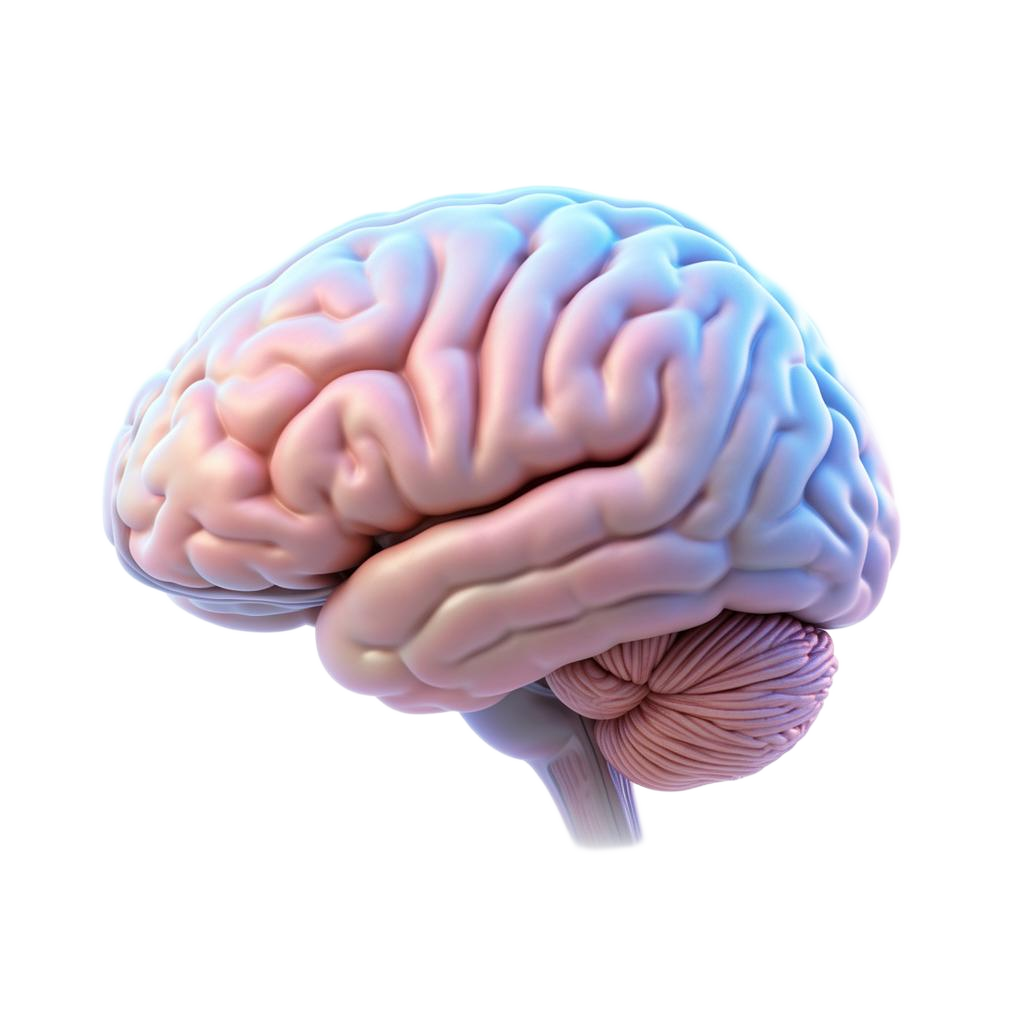
Temporoparietal Junction
Social awareness, communication, perspective taking, and social cognition.
Cerebellum
Motor coordination, timing, procedural learning, and supporting connectivity.
Trauma circuitry: the amygdala–hippocampus–prefrontal triangle
The amygdala detects threat and triggers the body's stress response. The hippocampus contextualizes memory — placing events in time and place so the brain knows they are over. The prefrontal cortex, especially the ventromedial region, provides top-down regulation that quiets the amygdala when context says the threat has passed. In PTSD, this triangle gets stuck in a survival pattern: the amygdala fires too easily, the hippocampus fails to file the memory as "past," and the prefrontal regulator cannot push the alarm down.
Hypervigilance and the salience network
The salience network — anterior insula, anterior cingulate, amygdala — decides what deserves attention. In PTSD it is biased toward potential threat. Footsteps behind you, a slamming door, a tone of voice, the feel of a particular fabric — each becomes a candidate trigger. On qEEG this often shows up as elevated high-beta activity, disrupted alpha rhythms, and frontal asymmetry consistent with chronic activation.
Emotional regulation and the prefrontal brake
The same prefrontal regions that should be regulating the threat system are often under-functioning in PTSD. This is what produces the experience of "I know I am safe and my body is not getting the message." Restoring top-down regulation is one of the central goals of qEEG-guided TMS for trauma.
The default mode network and self-perception
The default mode network supports self-referential thought and autobiographical memory. In PTSD it is often dysregulated, contributing to distorted self-blame, fragmented sense of self, and difficulty integrating the trauma into a continuous life story. Network-level treatment can help reweave this without requiring repeated narrative exposure.
Why insight and exposure alone sometimes aren't enough
Trauma-focused therapies like EMDR, prolonged exposure, and cognitive processing therapy are evidence-based and powerful. They work for many people. For others, the threat system is so activated that sitting with the trauma in therapy is intolerable — the body fires before the mind can do the work. Quieting the underlying circuit with qEEG-guided TMS can make trauma therapy possible, or it can produce gains on its own when therapy has not been enough.
Talk with our team about PTSD treatment in Lombard
Verify your insurance benefits or request a consultation — most families hear back within one business day.
What qEEG Brain Mapping shows in PTSD
A qEEG records 19+ channels of brain electrical activity for about 20 minutes — eyes open, eyes closed, and sometimes during a brief task. Software compares the recording to a normative database matched to your age and sex, producing color-coded maps that show which regions and frequencies are over- or under-active. This is the foundation of trauma brain mapping at Reign-Bow.
Brainwave activity: what the bands mean for trauma
For PTSD specifically, common findings include elevated high-beta activity (a hyperarousal signature), disrupted alpha rhythms (alpha is the resting, calm-but-alert state — often reduced after trauma), and frontal alpha asymmetry. Some patients show elevated theta in frontal regions consistent with dissociative patterns. Each finding turns the felt experience of "I am always braced" into a specific, treatable target.
Network function and connectivity
Beyond simple power, we look at how regions communicate. We examine coherence between the prefrontal cortex and limbic structures — the top-down regulation circuit. We look at the salience network for the hypervigilance signature. We compare left and right frontal cortex for asymmetry patterns associated with negative affect.
Pattern identification — separating PTSD from look-alikes
PTSD can look like anxiety, depression, or ADHD, and most patients carry features of more than one. The qEEG helps separate them. Trauma-related hypervigilance often has a distinct signature from generalized anxiety. Post-traumatic emotional numbness can look like depression but maps differently. Trauma-related concentration difficulty maps differently from ADHD. A correct map informs a correct plan.
Personalized treatment planning from real data
Once the map is interpreted, your physician selects TMS targets, frequency, and dosing based on your specific findings. There is no single "PTSD protocol" at Reign-Bow — there is your plan, built from your data, with measurable targets we can revisit on a follow-up qEEG. Read more about what brain mapping is and our qEEG program.
How TMS Therapy works for PTSD
The treatment process
Transcranial Magnetic Stimulation uses focused magnetic pulses to modulate activity in specific cortical regions. For PTSD, common targets include the right dorsolateral prefrontal cortex (using low-frequency stimulation to quiet hyperactivity associated with negative affect and threat processing), the left dorsolateral prefrontal cortex (to strengthen top-down regulation and lift depressive features), and other regions identified by your qEEG. Targets and parameters are selected from your map.
What sessions are like
You sit in a comfortable chair, fully awake. A small coil is positioned over the treatment area on your scalp. You will feel and hear a tapping sensation as the magnetic pulses are delivered. Sessions typically last 20–40 minutes. There is no anesthesia, no recovery time, and no cognitive fog afterward. You can listen to calm music, sit in silence, or talk with your technician — whatever helps you feel grounded.
Safety
TMS has been used clinically for more than two decades and has a strong safety record. The most common side effect is mild scalp sensation that fades within minutes. Less common is a transient headache during the first week. Serious adverse events are rare. TMS is FDA-cleared for adult depression, anxious depression, and OCD; PTSD applications are considered off-label and are delivered under physician oversight with personalized, qEEG-guided protocols.
Treatment timeline and what to expect
Most patients complete an initial course in 6–12 weeks of brief weekday sessions. Many notice early changes — better sleep, less startle, lower baseline arousal — within the first 2–4 weeks. More structural gains in flashback frequency, nightmare intensity, and emotional reactivity typically build over weeks 6–12. We use validated PTSD rating scales weekly so you can see the trajectory in numbers, not just impressions.
Treatment journey
From first call to follow-up qEEG
A typical brain-based care course at Reign-Bow. Exact timing varies with severity, age, and co-occurring conditions.
- Step 1
Consultation
Week 0
Talk through goals, history, and what you've already tried.
- Step 2
Insurance Verification
Week 0–1
Benefits checked; written estimate within one business day.
- Step 3
qEEG Brain Map
Week 1
20-minute, non-invasive recording compared to age-matched norms.
- Step 4
Physician Review
Week 1–2
Findings reviewed in plain language; protocol designed.
- Step 5
Personalized TMS
Weeks 2–10
Brief weekday sessions tailored to your brain map.
- Step 6
Follow-up qEEG
Week 12
Re-mapping confirms neurological change and next phase.
Follow-up qEEGs
At the end of the initial course, we repeat the qEEG. This is one of the most important parts of the program — it tells us whether the underlying pattern has actually shifted, not just whether the symptom rating moved. From that data we decide whether to taper, maintain, or extend treatment. Some patients return for a brief booster course six to twelve months later. See our full 8-step treatment process and our personalized brain stimulation programs.
PTSD symptoms we treat — scannable view
Intrusion
- Flashbacks and reliving experiences
- Intrusive memories during the day
- Nightmares and night terrors
- Physical reactions to reminders
Avoidance
- Steering clear of people, places, or activities
- Avoiding conversations about the event
- Emotional withdrawal and numbing
Negative changes in mood and cognition
- Persistent low mood or hopelessness
- Distorted self-blame, shame, or guilt
- Loss of interest in previously meaningful activities
- Difficulty experiencing positive emotion
Hyperarousal and reactivity
- Hypervigilance — constant threat scanning
- Exaggerated startle response
- Irritability, anger outbursts
- Sleep disturbance, especially staying asleep
- Concentration difficulty
When PTSD travels with other conditions
PTSD almost always travels with something else. Common companions:
- Depression — the most common co-occurrence; trauma-related depression has its own pattern.
- Anxiety — chronic activation from trauma overlaps deeply with anxiety presentations.
- Sleep disorders — nightmares and middle-of-the-night waking are core to PTSD.
- TBI — combat veterans and survivors of physical assault often carry both; the map helps separate them.
- Autism Behavior Support — autistic individuals are at elevated risk of trauma and benefit from sensory-aware care.
What patients tend to notice over a treatment course
- Lower baseline arousal — the body stops being braced for the day
- Fewer and less intense flashbacks and intrusive memories
- Reduced nightmare frequency and intensity
- Quieter startle response
- Better sleep onset and depth
- Less avoidance and more willingness to re-enter life
- More patience and less irritability with family
- The return of moments of present-tense joy
- A felt sense of "I am here, not back there"
- For many, the ability to use trauma therapy more effectively
Read real stories from local patients on our patient testimonials page.
Serving Lombard and nearby communities
Reign-Bow Treatment Center is based in Lombard, IL and provides PTSD therapy in Lombard for veterans, first responders, and survivors across the western Chicago suburbs. If you are searching for "PTSD treatment Lombard IL" or "trauma brain mapping near me," we welcome patients from each of the communities below. Consultations are by appointment only. Call 630-448-2721 or email info@reignbowtreatmentcenter.com.
Why Reign-Bow
Insurance, verified before you start
Many BCBS, Aetna, Cigna, United Healthcare, and Tricare plans cover some or all of qEEG and TMS components — often under co-occurring depression diagnoses where TMS is FDA-cleared. We verify benefits before treatment and send a written estimate within one business day. Submit our insurance verification form to begin.
Serving Chicagoland families since 2022
We opened our doors to bring qEEG-guided, drug-free care to people in the western suburbs who deserved more than another medication trial. Every plan is built around objective brain data and a real person — not a template.
Family-centered care
PTSD reshapes households. We include spouses and adult family members when invited, give you language for what you are experiencing, and coordinate with trauma therapists, VA care teams, and department resources so the whole plan moves in the same direction.
A team that explains the brain in plain language
You will never leave a Reign-Bow appointment confused about what the map showed or why a target was chosen. The science is the point — and so is your understanding of it.
Talk with our team about PTSD treatment
Verify your insurance benefits or request a consultation — most families hear back within one business day.
Frequently asked questions
›What is qEEG-guided PTSD treatment?
qEEG-guided PTSD treatment uses a quantitative EEG brain map to identify the trauma circuitry patterns — hypervigilance, emotional dysregulation, weakened top-down control — driving your symptoms, then designs a personalized, drug-free plan (typically TMS) to address them. Treatment is targeted to your brain, not to a generic protocol.
›Is TMS therapy safe for PTSD?
TMS is non-invasive, drug-free, and well-tolerated. There are no needles, no sedation, and no recovery time. TMS is FDA-cleared for adult depression, anxious depression, and OCD; PTSD applications are considered off-label and are delivered under physician oversight with personalized, qEEG-guided protocols. Many veterans and trauma survivors have benefited.
›Will I have to retell my trauma to be treated?
No. qEEG-guided TMS works at the level of the brain circuit, not the narrative. You can choose how much story you want to share with our team. We do not require trauma recounting to map or to treat.
›Can TMS reduce nightmares and flashbacks?
Many patients report meaningful reduction in nightmares, flashbacks, and intrusive memories as treatment progresses. These symptoms are driven by overactive trauma circuitry and reduced top-down regulation — patterns TMS is well suited to address when guided by your qEEG.
›Is this for combat veterans or also civilian trauma?
Both. PTSD is the same neurological condition whether the trauma was combat, assault, an accident, a medical event, childhood abuse, or sustained relational harm. We treat veterans, first responders, healthcare workers, survivors of violence, and people with complex developmental trauma.
›Does insurance cover PTSD brain mapping and TMS?
Many BCBS, Aetna, Cigna, United Healthcare, and Tricare plans cover some or all of qEEG and TMS components — often under co-occurring depression diagnoses. We verify benefits before treatment and send a written estimate within one business day.
›How does this compare to EMDR or prolonged exposure therapy?
EMDR and prolonged exposure are evidence-based trauma therapies that work through structured reprocessing. qEEG-guided TMS works at the circuit level. They are complementary, not competing — many patients use both. Brain-based care can make trauma therapy easier to tolerate by quieting the threat system.
›How long does PTSD treatment take?
Most patients complete an initial course in 6–12 weeks of brief weekday sessions. Many notice early changes — better sleep, less startle, lower baseline arousal — within the first 2–4 weeks. More structural gains in flashback frequency and emotional reactivity typically build over 6–12 weeks.
›What is complex PTSD and is it different?
Complex PTSD develops after prolonged or repeated trauma, often in childhood or in captivity-like circumstances. It includes the core PTSD symptoms plus persistent difficulties with emotion regulation, self-perception, and relationships. qEEG patterns often show more global dysregulation, and treatment plans are typically longer and paced more gradually.
›Do you serve veterans and first responders specifically?
Yes. We have experience with combat-related PTSD, operational stress in first responders, and the cumulative trauma that comes with frontline healthcare work. We will work with VA care teams or department resources when invited.
›Do you serve patients outside of Lombard?
Yes. We serve Lombard, Naperville, Oak Brook, Elmhurst, Wheaton, Downers Grove, Glen Ellyn, Hinsdale, and surrounding Chicagoland communities. Consultations are by appointment only — call 630-448-2721 or email info@reignbowtreatmentcenter.com.
›What does a typical first visit look like?
The first visit is a clinical consultation and qEEG brain map. The cap is painless, the recording takes about 20 minutes, and you can sit comfortably the entire time. Within a week, our physicians review the map with you and propose a personalized treatment plan.