Our 8-step process

How treatment works at Reign-Bow

A clear, measurable path from your first call to long-term maintenance. Every plan is personalized, every protocol is guided by qEEG brain mapping, and every step is supervised by our physician team.

The Treatment Journey

Eight steps, one personalized path

Hover or tap a step to read what happens in it. The same sequence applies to every patient — what changes is the brain map underneath.

  1. Step 1 · Same-day in most cases

    Insurance Verification

    Before your first visit we verify your benefits, explain coverage for qEEG and TMS, and outline any out-of-pocket cost in writing — so there are no surprises. Most major insurance plans are accepted and we handle the paperwork for you.

  2. Step 2 · 45–60 minutes

    Consultation

    We start by listening. You share your concerns, history, prior treatments, and goals. A clinician explains how qEEG-guided care works and whether it is a good fit for your child or yourself. There is no obligation to continue after the consultation.

  3. Step 3 · Single 20-minute session

    qEEG Brain Mapping

    A non-invasive 19-channel recording of brain electrical activity — eyes open, eyes closed, and (when appropriate) during a task. The recording is compared to a normative database matched to age, producing color-coded maps that reveal exactly where the brain is over- or under-active.

  4. Step 4 · 1–2 weeks

    Physician Review

    Our medical team reviews the qEEG alongside your history, screening tools, and consultation notes. We look for the specific patterns associated with your concerns — anxiety, attention, mood, regulation, sleep — and confirm there are no medical contraindications to treatment.

  5. Step 5 · 60-minute review visit

    Personalized Treatment Plan

    You receive a written plan: the targets we identified, the protocols we recommend, the expected number of sessions, projected milestones, and how progress will be measured. We answer every question before treatment begins.

  6. Step 6 · 20–40 min · 3–5×/week

    Treatment Sessions

    TMS sessions are conducted in our Lombard clinic. The patient is fully awake, can read, watch a show, or talk with the technician. Most children and adults tolerate sessions easily. Side effects are uncommon and usually minor (brief scalp sensation or mild fatigue early on).

  7. Step 7 · Weekly

    Progress Tracking

    We measure progress with validated clinical scales, parent or self-report tools, and clinician observation at every visit. Your team meets weekly to confirm the plan is on track and to adjust if needed.

  8. Step 8 · Quarterly or as needed

    Follow-Up & Maintenance

    A follow-up qEEG confirms the neurological change matches the behavioral change. We then create a maintenance schedule — periodic check-ins, refresher sessions if needed, and parent guidance for sustaining gains. Most patients do not need ongoing treatment, only occasional follow-up.
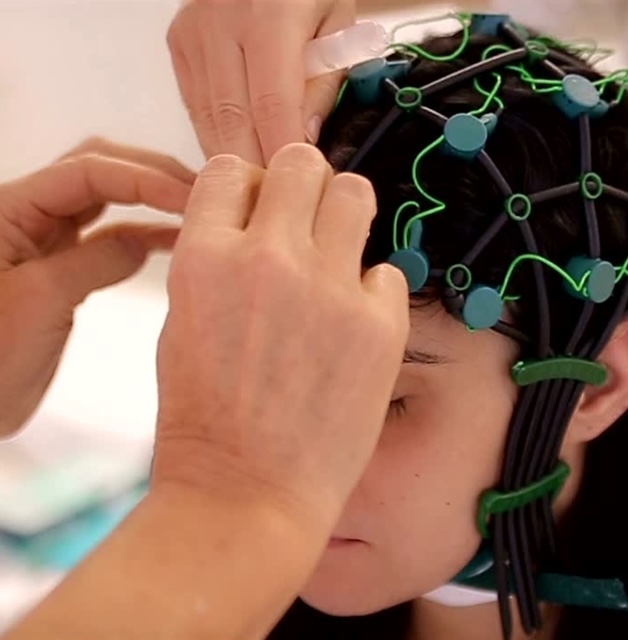
Child receiving qEEG brain mapping
qEEG brain mapping — gentle, non-invasive, 20 minutes.
TMS treatment room
TMS treatment suite in our Lombard clinic.
Progress tracking dashboard
Weekly progress dashboard shared with the family.

What Families Experience

Before · During · After

Treatment is not a single moment. It is a transition — from concern, to measurement, to lasting change.

Before Treatment
  • Emotional regulation difficulties
  • Sleep challenges
  • Focus concerns
  • Social communication struggles
During Treatment
  • Objective brain measurements
  • Progress tracking
  • Regular reviews
  • Personalized adjustments
After Treatment
  • Improved quality of life
  • Better communication
  • Increased focus
  • Better emotional regulation

What we deliver

Measurable care, built around the brain

19-channel
qEEG Brain Mapping
normative comparison
100%
Personalized Plans
written, measurable
Weekly
Progress Monitoring
validated scales
Every step
Physician Oversight
MD-supervised

The Difference

Symptom-based care vs. brain-mapping guided care

Most behavioral health care starts with a guess. We start with a measurement.

Traditional

Symptom-Based Care

  • Diagnosis based on symptom checklists
  • Trial-and-error medication adjustments
  • Subjective progress ("how do you feel?")
  • Months of waiting between changes
  • One-size-fits-all protocols
Reign-Bow

Brain-Mapping Guided Care

  • Diagnosis informed by 19-channel qEEG
  • Protocols targeted to measured patterns
  • Objective brain + behavior measurement
  • Weekly reviews, weekly adjustments
  • Personalized plan for every patient

The Reign-Bow treatment process is designed to remove guesswork. Instead of trying medications or behavioral strategies in sequence and waiting to see what happens, we measure what is actually occurring in the brain — and then design a treatment plan that targets exactly those patterns.

Why we measure first

Most behavioral health care starts with a guess. A child has trouble focusing, so a stimulant is tried. If it does not work, a different one is tried. Months pass. The Reign-Bow process replaces guessing with measurement. A qEEG shows us the actual brain pattern, and that pattern becomes the treatment target. Read more about what brain mapping is.

Why we measure again

The follow-up qEEG is the difference between "I think it helped" and "we can prove it changed." We compare the post-treatment map to the baseline and to the normative database. When neurological change matches behavioral change, families have lasting confidence that treatment worked.

Family involvement

Parents are part of every step for pediatric patients. We share findings in plain language, explain the rationale for every protocol, and provide guidance for home and school. Many families say this transparency is what made the process feel safe.

A family meeting with a Reign-Bow clinician

Start with a consultation

Verify your insurance benefits or request a consultation — most families hear back within one business day.

Frequently asked questions

How long does the whole process take?

From consultation to course completion, most families spend 8–14 weeks. The treatment phase itself is usually 6–8 weeks of consistent sessions, with consultation and qEEG before and follow-up after.

Do I have to commit to treatment after the qEEG?

No. After the physician review and treatment-plan visit you decide whether to continue. Many families take a week or two to discuss before scheduling treatment.

What does a treatment session feel like?

TMS sessions feel like a gentle tapping on the scalp. Patients remain fully awake, can read or watch a show, and there is no sedation. Most patients return to school or work immediately after.

Are there age limits?

We treat children as young as six, teens, young adults, and parents. The youngest patients are screened carefully and family-supported throughout.

How do you measure progress?

We use validated clinical rating scales appropriate to the diagnosis, plus parent/self-report tools, plus clinician observation, plus the follow-up qEEG. Multiple measures together give us a complete picture.

What if treatment is not working?

We review weekly and adjust the protocol if data does not match the plan. In rare cases where TMS is not a good fit, we refer to other evidence-based options. You are never locked in.

Can I bring my child after school?

Yes. We offer after-school and early-evening slots to minimize school disruption for pediatric patients.

Related topics

The Reign-Bow Promise

Your journey starts with understanding the brain.

Verify your insurance, schedule a consultation, and take the first measured step toward lasting change for yourself or your child.

Most families begin within 1–2 weeks of their first call.
Reign-Bow brain illustration