
Key takeaways
Depression treatment in Lombard, IL — at a glance
- • Depression Brain Mapping (qEEG) reveals the specific neural patterns behind mood, energy, motivation, and sleep — so treatment is targeted, not guessed.
- • FDA-cleared TMS is non-invasive, drug-free, and built from your brain map. Cleared for adult depression, anxious depression, and OCD.
- • Depression Therapy in Lombard at Reign-Bow serves adults across DuPage County and the western Chicago suburbs.
- • Serving Chicagoland families since 2022. Consultations by appointment only.
Depression is not a character problem — it is a brain-network problem. At Reign-Bow Treatment Center in Lombard, IL, our team uses qEEG brain mapping to see exactly where mood-regulation networks are dysregulated, then designs a personalized, drug-free TMS therapy plan to support the specific circuits involved. The result is care that targets the biology underneath low mood, anhedonia, fatigue, and concentration loss — instead of cycling through one more medication while the underlying pattern stays the same.
What depression actually is
Major depressive disorder is more than feeling sad. It is a sustained shift in how the brain regulates mood, energy, motivation, sleep, appetite, concentration, and self-perception. It is the experience of waking up tired before the day has even asked anything of you. It is doing the things that used to feel good and feeling nothing. It is the slow narrowing of a life that you can see narrowing and cannot stop.
The clinical definition requires persistent symptoms for at least two weeks — but most patients who reach our door have been carrying it for months or years. Many have tried multiple medications. Many have been told they are doing everything right. The problem is not effort; the problem is that talk-and-pill care has not addressed the underlying neural pattern.
Common symptoms
- Persistent low mood, sadness, or emptiness
- Loss of interest or pleasure in previously enjoyed activities (anhedonia)
- Fatigue and low energy that sleep does not fix
- Sleep changes — insomnia or sleeping too much
- Appetite and weight changes
- Difficulty concentrating, making decisions, or remembering
- Feelings of worthlessness, guilt, or hopelessness
- Psychomotor slowing or restlessness
- Recurrent thoughts of death or suicidal ideation
- Emotional numbness — the absence of feeling rather than the presence of sadness
Daily challenges that don't show up on a checklist
Depression makes the small things impossibly heavy. The shower becomes a project. The unread emails become a wall. The friend you meant to call becomes another reminder of failure. Eating something nourishing requires a chain of decisions you cannot finish making. The world narrows to what is in arm's reach, and then narrower than that. The cost shows up in marriages that feel like roommates, in careers that quietly stop advancing, in children who learn to tiptoe around a parent who is present but not really there.
Causes and contributors
Depression is multi-factorial. Genetics matter — depression often runs in families. Life events, loss, chronic stress, and trauma raise risk. Medical conditions like hypothyroidism, chronic inflammation, vitamin deficiencies, and cardiovascular disease can drive or mimic depression. Sleep loss and substance use deepen it. Hormonal transitions — postpartum, perimenopause — can unmask vulnerability that was previously compensated. At the brain level, all of these end up converging on dysregulated mood networks, which is what the qEEG actually shows.
Functional impact
Untreated depression shortens life expectancy, raises cardiovascular and dementia risk, and is a leading cause of disability worldwide. Treated depression looks different — capacity returns, relationships warm back up, work becomes possible again. The point of care is not just symptom reduction; it is the return of you.
What is happening in the depressed brain
Three brain systems matter most for depression: mood regulation networks, the default mode network, and emotional processing circuits.
Brain Networks Commonly Evaluated During qEEG Brain Mapping
qEEG helps identify patterns of brain activity that may contribute to communication, focus, emotional regulation, sensory processing, and behavior.
Sensory Cortex
Sensory integration, auditory processing, visual processing, and sensory modulation.
Prefrontal Cortex
Executive function, focus, attention, impulse control, planning, and emotional regulation.
Limbic System
Emotion regulation, anxiety response, motivation, mood stability, and stress processing.
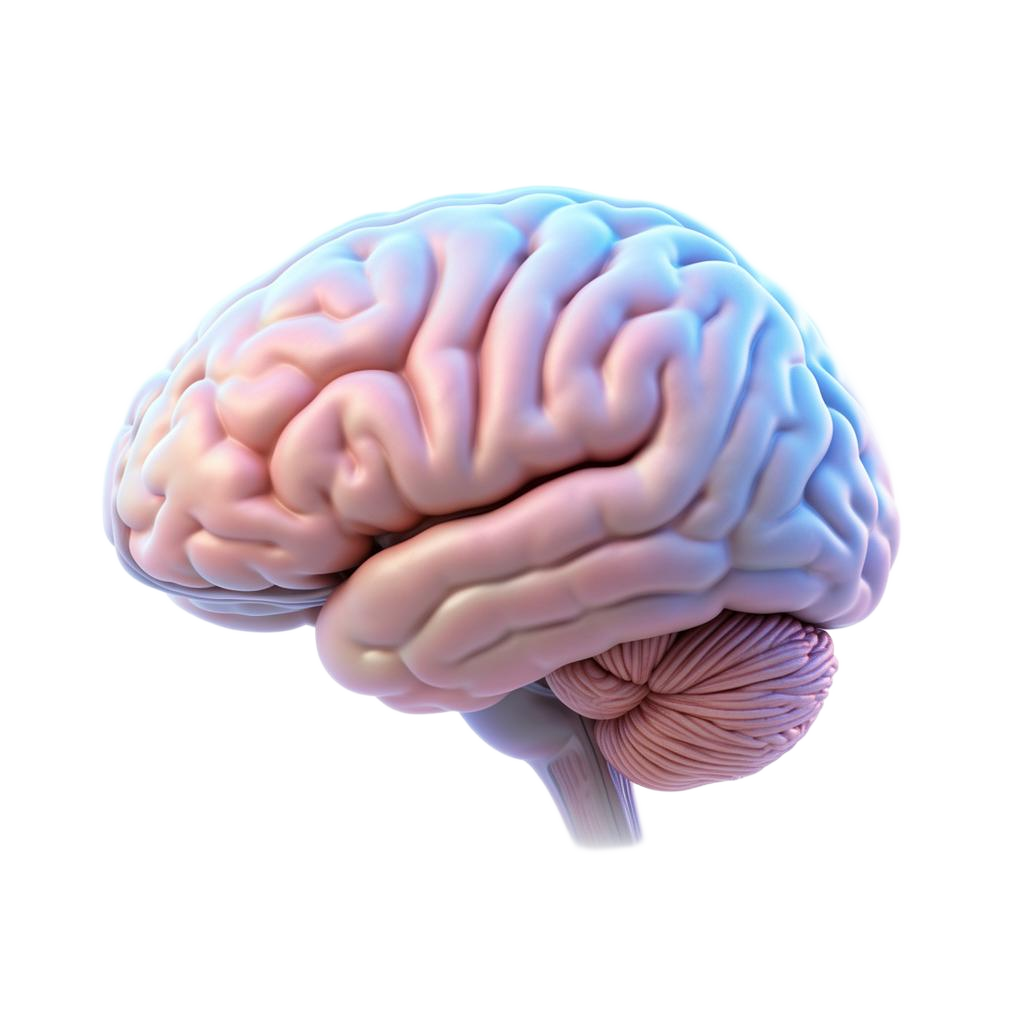
Temporoparietal Junction
Social awareness, communication, perspective taking, and social cognition.
Cerebellum
Motor coordination, timing, procedural learning, and supporting connectivity.
Mood regulation networks and the left prefrontal cortex
The left dorsolateral prefrontal cortex is one of the most consistently implicated regions in depression. It is involved in approach motivation, positive affect, and the cognitive flexibility needed to consider alternatives to a dark thought. In depression, this region is often underactive. The right dorsolateral prefrontal cortex, by contrast, is often relatively overactive — biasing the brain toward withdrawal and negative affect. This left/right asymmetry is one of the most studied biomarkers in depression neuroscience.
The default mode network and rumination
The default mode network is most active when the mind is not focused on the outside world. In healthy function, it supports memory consolidation, daydreaming, and self-reflection. In depression, it becomes the engine of rumination — replaying past failures, rehearsing future doom, narrating a hopeless story to itself. Brain-based care can help shift the balance between this network and the task-positive networks that pull attention outward.
Emotional processing circuits
Depression also involves dysregulation in deeper limbic structures — the amygdala, the hippocampus, the subgenual cingulate — that process emotion, fear, and memory. Connectivity between these regions and the prefrontal cortex is often altered. The result is an emotional system that has lost its top-down regulator, leaving sadness, anhedonia, and shame to run unchecked.
Why "just think positive" fails
You cannot reason your way out of a network-level problem. The brain regions that would normally generate alternative thoughts, summon positive affect, and quiet rumination are themselves under-functioning. That is not weakness; that is biology. It is also exactly why network-level treatment — TMS that directly modulates the underactive left prefrontal cortex — works for many people who could not respond to talk and medication alone.
Why medication helps some brains and not others
Antidepressants raise the availability of neurotransmitters across the whole brain. For many people, that is enough to nudge the network back toward function. For others — perhaps a third — it is not. The dysregulation is structural to the network, and a more targeted, network-level approach is required. qEEG-guided TMS is exactly that approach.
Talk with our team about depression treatment in Lombard
Verify your insurance benefits or request a consultation — most families hear back within one business day.
What qEEG Brain Mapping shows in depression
A qEEG records 19+ channels of brain electrical activity for about 20 minutes — eyes open, eyes closed, and sometimes during a brief task. Software compares the recording to a normative database matched to your age and sex, producing color-coded maps that show which regions and frequencies are over- or under-active. This is the foundation of depression brain mapping at Reign-Bow.
Brainwave activity: what the bands mean for mood
For depression specifically, several findings are well replicated. Frontal alpha asymmetry — with more alpha (less activity) on the left than the right — correlates with depression severity and treatment response. Elevated theta in frontal regions is associated with cognitive slowing. Disrupted alpha rhythms can signal the dysregulated arousal pattern seen in anxious depression. Beta abnormalities track with the agitation and rumination subtype.
Network function and connectivity
Beyond simple power, we look at how regions communicate. We examine coherence between prefrontal regions and the limbic system — the top-down regulation circuit that should quiet rumination. We look at the default mode network for the rumination signature. We compare left and right frontal cortex for the asymmetry pattern.
Pattern identification: subtypes that matter
Two patients with the same depression diagnosis can have very different brain maps. One may show the classic left-frontal hypoactivation pattern. Another may show the anxious-depression mixture with elevated high-beta on top of asymmetry. A third may show a slowed, low-arousal pattern more consistent with depleted depression. Each pattern calls for a different TMS protocol — and the qEEG is how we know which one fits.
Personalized treatment planning from real data
Once the map is interpreted, your physician selects TMS targets, frequency, and dosing based on your specific findings — informed by the standard left dorsolateral prefrontal protocol but adapted to your data. We can revisit the same map on a follow-up qEEG to measure how the underlying pattern has changed. Read more about what brain mapping is and our qEEG program.
How TMS Therapy works for depression
The treatment process
Transcranial Magnetic Stimulation uses focused magnetic pulses to modulate activity in specific cortical regions. For depression, the standard FDA-cleared target is the left dorsolateral prefrontal cortex, stimulated at frequencies that increase activity in this typically underactive region. When the qEEG shows additional patterns — right-side hyperactivity, anxious features, slowing — we add or modify targets accordingly. There is no "one-size" depression protocol at Reign-Bow.
What sessions are like
You sit in a comfortable chair, fully awake. A small coil is positioned over the treatment area on your scalp. You will feel and hear a tapping sensation as the magnetic pulses are delivered. Sessions typically last 20–40 minutes. There is no anesthesia, no IV, no recovery time, and no cognitive fog afterward — most patients return directly to work, errands, or driving.
Safety
TMS has been used clinically for more than two decades and has a strong safety record. The most common side effects are mild scalp sensation and a transient headache during the first week, both of which typically resolve. Unlike ECT, TMS does not cause memory loss, does not require anesthesia, and does not produce a seizure. TMS is FDA-cleared for adult depression, anxious depression, and OCD.
Treatment timeline and what to expect
A standard course is daily weekday sessions over 4–6 weeks, often extended to 6–8 weeks based on response. Many patients report early shifts — better sleep, less morning heaviness, slightly more energy — within the first 2–3 weeks. More substantial mood, motivation, and concentration gains typically build over weeks 4–8. We use validated rating scales (PHQ-9 and similar) weekly so you can see the trajectory in numbers, not just impressions.
Treatment journey
From first call to follow-up qEEG
A typical brain-based care course at Reign-Bow. Exact timing varies with severity, age, and co-occurring conditions.
- Step 1
Consultation
Week 0
Talk through goals, history, and what you've already tried.
- Step 2
Insurance Verification
Week 0–1
Benefits checked; written estimate within one business day.
- Step 3
qEEG Brain Map
Week 1
20-minute, non-invasive recording compared to age-matched norms.
- Step 4
Physician Review
Week 1–2
Findings reviewed in plain language; protocol designed.
- Step 5
Personalized TMS
Weeks 2–10
Brief weekday sessions tailored to your brain map.
- Step 6
Follow-up qEEG
Week 12
Re-mapping confirms neurological change and next phase.
Follow-up qEEGs
At the end of the initial course, we repeat the qEEG. This is one of the most important parts of the program — it tells us whether the underlying pattern has actually shifted, not just whether the symptom rating moved. From that data we decide whether to taper, maintain, or extend treatment. Some patients return for a brief booster course six to twelve months later. See our full 8-step treatment process and our personalized brain stimulation programs.
Depression symptoms we treat — scannable view
Mood and affect
- Persistent low mood or emptiness
- Anhedonia — loss of pleasure in things that used to matter
- Emotional numbness
- Tearfulness or, alternately, the inability to cry
Energy and motivation
- Fatigue that sleep doesn't fix
- Heaviness in the body
- Difficulty starting anything — initiation paralysis
- Withdrawal from work, social life, and hobbies
Cognition
- Concentration difficulty and word-finding problems
- Indecisiveness and decision fatigue
- Memory complaints
- Rumination and self-critical thought loops
Sleep and appetite
- Insomnia or hypersomnia
- Early-morning waking
- Appetite changes in either direction
When depression travels with other conditions
Pure depression is rare. Most patients arrive with one or more of the following:
- Anxiety — anxious depression has its own FDA-cleared TMS protocols and frequently needs combined targets.
- PTSD — trauma-related depression has a distinct pattern and a distinct plan.
- ADHD — adults often develop depression after years of executive struggle and underachievement.
- Autism Treatment in Lombard — autistic adults frequently carry depression from years of masking and feeling out of step.
- Sleep disorders — depression and sleep loss feed each other.
- TBI — post-concussion mood symptoms have a network signature TMS can address.
What patients tend to notice over a treatment course
- Mornings that feel possible again
- Energy that lasts past lunch
- Interest returning to activities that had gone gray
- Quicker emotional recovery from setbacks
- Less rumination; fewer 3 a.m. thought loops
- Better concentration and word recall
- Improved sleep onset and depth
- More patience in relationships
- The return of curiosity
- A felt sense of "I'm back" — sometimes for the first time in years
Read real stories from local patients on our patient testimonials page.
Serving Lombard and nearby communities
Reign-Bow Treatment Center is based in Lombard, IL and provides depression therapy in Lombard for adults across the western Chicago suburbs. If you are searching for "depression treatment Lombard IL" or "qEEG depression near me," we welcome patients from each of the communities below. Consultations are by appointment only. Call 630-448-2721 or email info@reignbowtreatmentcenter.com.
Why Reign-Bow
Insurance, verified before you start
FDA-cleared TMS for depression is covered by most major commercial insurance plans for qualifying diagnoses. Many BCBS, Aetna, Cigna, and United Healthcare plans cover some or all of qEEG and TMS components. We verify your specific benefits and send a written estimate within one business day. Submit our insurance verification form to begin.
Serving Chicagoland families since 2022
We opened our doors to bring qEEG-guided, drug-free care to people in the western suburbs who were tired of cycling through antidepressants without lasting relief. Every plan is built around objective brain data and a real person — not a template.
Family-centered care
Depression reshapes households. We include spouses and adult family members when invited, give you language to talk about what you are experiencing, and coordinate with therapists and prescribers so the whole plan moves in the same direction.
A team that explains the brain in plain language
You will never leave a Reign-Bow appointment confused about what the map showed or why a target was chosen. The science is the point — and so is your understanding of it.
Talk with our team about depression treatment
Verify your insurance benefits or request a consultation — most families hear back within one business day.
Frequently asked questions
›What is treatment-resistant depression?
Treatment-resistant depression describes depression that has not improved after two or more adequate trials of antidepressant medication. It does not mean depression cannot improve — it means a different approach, like qEEG-guided TMS, may be a better fit for your brain.
›How does qEEG help guide depression treatment?
Quantitative EEG measures electrical activity across the brain and reveals patterns associated with mood, focus, sleep, and emotional regulation. We use that objective data to target TMS protocols to the regions most likely to benefit you — instead of using a one-size-fits-all approach.
›Is TMS covered by insurance?
FDA-cleared TMS for depression is covered by most major commercial insurance plans for qualifying diagnoses, typically after a trial of antidepressant medication. We verify your specific benefits and walk you through any out-of-pocket costs before treatment begins.
›How long does TMS treatment take?
A standard TMS course is daily weekday sessions over 4–6 weeks, often extended to 6–8 weeks based on response and your qEEG. Each session typically lasts 20–40 minutes. There is no anesthesia and no downtime — most patients return to work or school directly afterward.
›Is TMS painful?
TMS is non-invasive and well tolerated. Most patients describe a tapping sensation on the scalp during stimulation. Mild scalp discomfort or a brief headache can occur early in the course and usually resolves within the first week.
›Will I have to stop my medication?
Not necessarily. Many patients continue antidepressant medication during TMS — and we coordinate closely with your prescriber. Some patients are eventually able to reduce dose under physician supervision; others stay on a stable regimen alongside TMS gains.
›What is the difference between TMS and ECT?
ECT is an inpatient procedure requiring anesthesia and producing a generalized seizure. TMS is an office-based, awake, non-invasive procedure using focused magnetic pulses to a small target. There is no seizure, no anesthesia, no memory side effect, and no recovery time.
›How quickly will I notice changes?
Many patients report early shifts — better sleep, less morning heaviness, slightly more energy — within the first 2–3 weeks. More substantial mood, motivation, and concentration gains typically build over weeks 4–8.
›What if TMS didn't help the first time I tried it?
It happens. Many patients respond when treatment is guided by qEEG and individualized parameters rather than a fixed protocol. A new brain map can reveal what was missed, and an updated plan can change the outcome.
›Does depression treatment include therapy?
Our program is centered on qEEG and TMS, and we coordinate with your therapist so the work in their office and the work in ours pull the same direction. If you are not currently in therapy, we can suggest referrals.
›Do you serve patients outside of Lombard?
Yes. We serve Lombard, Naperville, Oak Brook, Elmhurst, Wheaton, Downers Grove, Glen Ellyn, Hinsdale, and surrounding Chicagoland communities. Consultations are by appointment only — call 630-448-2721 or email info@reignbowtreatmentcenter.com.
›What does a typical first visit look like?
The first visit is a clinical consultation and qEEG brain map. The cap is painless, the recording takes about 20 minutes, and you can sit comfortably the entire time. Within a week, our physicians review the map with you and propose a personalized treatment plan.